

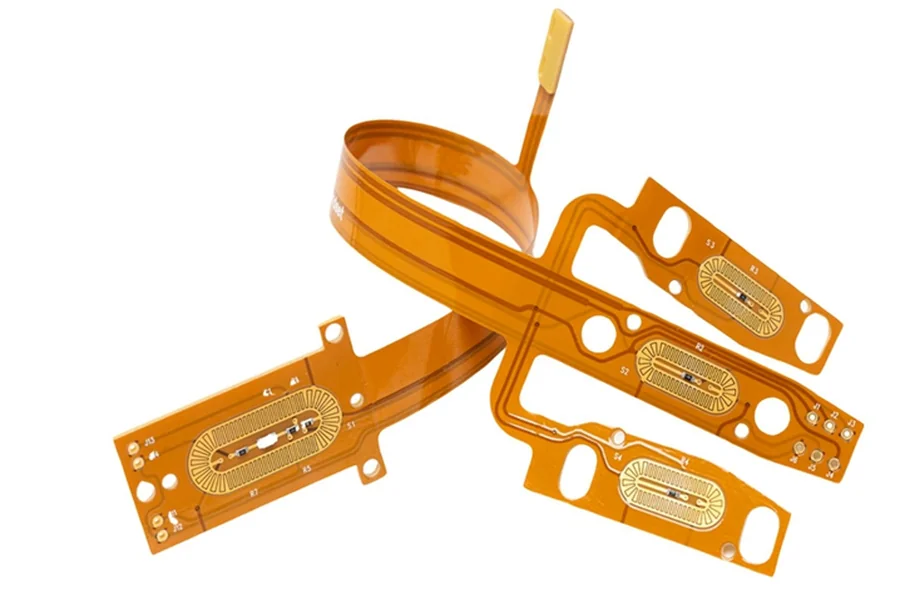
The flexible printed circuit board has become an essential component in modern electronics, offering a unique combination of adaptability, lightweight structure, and space efficiency. Unlike traditional rigid boards, a flexible printed circuit board is designed to bend, fold, or twist without compromising its electrical performance. This adaptability has enabled engineers to design more compact, reliable, and innovative devices across industries ranging from consumer electronics to aerospace. As products become smaller and more advanced, the demand for flexible printed circuit boards continues to rise.
Structure of a Flexible Printed Circuit Board
A flexible printed circuit board is typically made using a thin, flexible substrate such as polyimide or polyester film instead of the rigid fiberglass material used in traditional boards. The copper conductor layers are bonded to this flexible base, allowing the board to bend and conform to various shapes without breaking. These copper layers are etched to create conductive traces, pads, and vias, enabling seamless electrical connections between components. An insulating overlay, often called a coverlay, is applied to protect the copper from oxidation, mechanical damage, and short circuits. Depending on the application, flexible printed circuit boards can be single-sided, double-sided, or multi-layered, offering varying levels of complexity and component density.
Benefits of Flexible Printed Circuit Board
The most obvious advantage of a flexible printed circuit board is its ability to bend and conform to irregular shapes. This feature allows for creative product designs where space is limited or where components must be connected across moving parts. In addition to flexibility, these boards are lightweight, reducing the overall weight of electronic devices — a crucial factor in portable and wearable technology. Flexible boards also help reduce assembly complexity by eliminating the need for bulky connectors and wiring harnesses, improving reliability by minimizing connection points. Furthermore, they offer excellent resistance to vibration and mechanical stress, making them suitable for demanding environments such as automotive and aerospace applications.
Manufacturing Process of Flexible Printed Circuit Board
The manufacturing of a flexible printed circuit board requires precision and specialized equipment. The process begins with selecting the appropriate flexible substrate, such as polyimide, based on the mechanical and thermal requirements of the application. Copper foil is laminated onto the substrate and patterned using photolithography to create the circuit design. Once the unwanted copper is etched away, the board undergoes plating to ensure reliable electrical connections. For multi-layer designs, additional layers are stacked and bonded using adhesive or lamination techniques. Holes for vias and component leads are drilled or laser-cut, then plated to establish interconnections between layers. Finally, a protective coverlay is applied to safeguard the circuitry, and the board is tested for continuity and performance before shipping.
Applications of Flexible Printed Circuit Board
Flexible printed circuit boards are used in a wide range of industries due to their adaptability and performance. In consumer electronics, they are found in smartphones, tablets, cameras, and wearable devices, where compactness and reliability are essential. In the automotive industry, flexible boards are used in dashboard electronics, sensors, and advanced driver-assistance systems, where they must withstand vibrations and temperature fluctuations. Aerospace and defense applications rely on flexible PCBs for communication equipment, navigation systems, and satellites, where weight savings and durability are critical. Medical devices also make extensive use of flexible boards in diagnostic tools, imaging equipment, and patient monitoring systems, benefiting from their lightweight and customizable form factors.
Advancements in Flexible Printed Circuit Board Technology
Over the years, advancements in materials and fabrication techniques have greatly expanded the capabilities of flexible printed circuit boards. High-density interconnect (HDI) technology has enabled engineers to create boards with finer traces and smaller vias, allowing for higher circuit density in compact spaces. Improved copper and substrate materials have enhanced thermal stability and electrical performance, making flexible boards suitable for high-speed data transmission and power electronics. These improvements have opened the door for flexible PCBs to play a critical role in emerging technologies such as foldable smartphones, medical implants, Internet of Things (IoT) devices, and next-generation communication systems.
Handling and Maintenance of Flexible Printed Circuit Board
Despite their durability and adaptability, flexible printed circuit boards must be handled carefully to maintain optimal performance. Excessive bending at sharp angles, over-flexing, or improper storage can damage the copper traces or the substrate. During assembly, careful soldering practices are necessary to avoid delamination or heat damage to the flexible material. Using proper strain reliefs and ensuring the correct bend radius during installation can significantly extend the lifespan of a flexible PCB. Additionally, anti-static precautions should always be observed to prevent electrostatic discharge from damaging sensitive components.
Future of Flexible Printed Circuit Board in Electronics
The future of the flexible printed circuit board looks promising as more industries embrace lightweight, space-efficient, and versatile electronic designs. The rapid growth of wearable devices, foldable screens, electric vehicles, and aerospace innovations will continue to fuel demand for high-quality flexible PCBs. As manufacturing processes become more efficient and materials improve, costs are expected to decrease, making these boards accessible to even more applications. With the push toward smaller, faster, and more reliable devices, the flexible printed circuit board is set to remain a key player in the electronics industry for decades to come.
Choosing the Right Flex PCB Manufacturer
When planning a project that requires flexible circuit technology, partnering with an experienced flex PCB manufacturer is essential. A skilled manufacturer will not only deliver boards that meet exact design specifications but also provide guidance on material selection, design optimization, and production scalability. They will have the necessary equipment, expertise, and quality control systems to produce flexible PCBs that perform reliably in their intended applications. By choosing the right manufacturing partner, you can ensure that your products meet the highest standards of performance, durability, and efficiency.
