

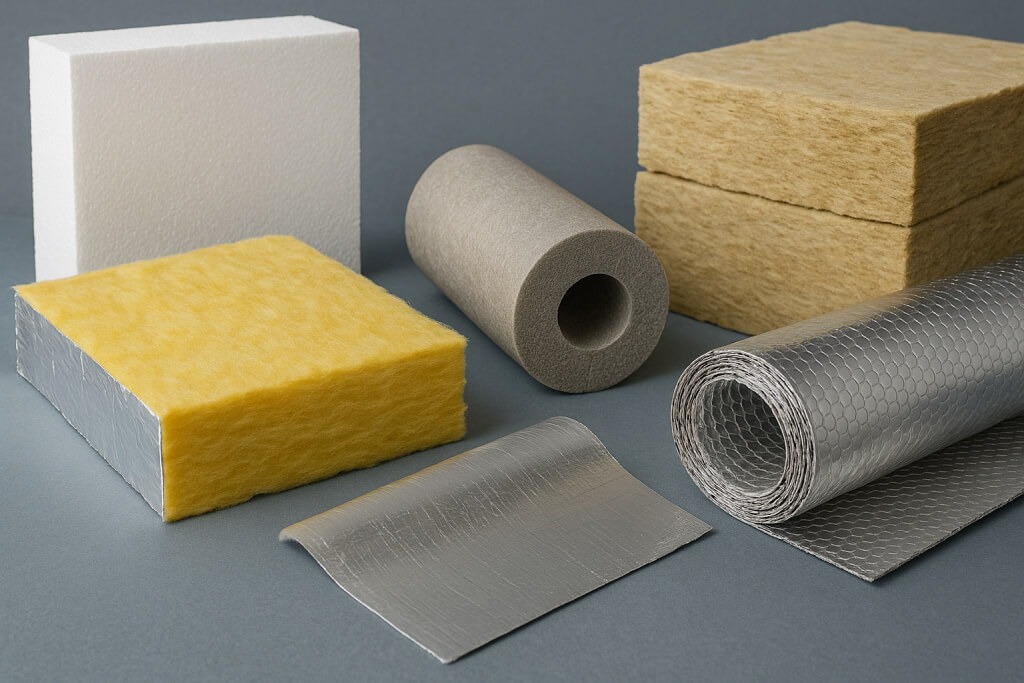
Industrial insulation plays a critical role in how well facilities operate—especially in environments where heat, cold, moisture, and corrosion can impact performance, safety, and energy costs. From refineries and power plants to food processing and manufacturing, the right insulation material helps stabilize process temperatures, protect personnel, and reduce wasted energy.
But “industrial insulation” isn’t one-size-fits-all. Different systems (steam lines vs. chilled water piping vs. exhaust stacks) demand different insulation properties. Below is a practical guide to common industrial insulation materials, where they’re used, and what factors drive the right selection.
Why Material Selection Matters in Industrial Insulation
In industrial settings, insulation is more than comfort—it’s a layer of engineered protection. A material that performs well on hot piping may fail on outdoor equipment exposed to weather. Some materials tolerate vibration better, while others excel at moisture resistance or fire performance. Choosing the right insulation helps support:
- Thermal efficiency (keeping heat in or out)
- Process consistency (stable operating temperatures)
- Condensation control (important for cold systems)
- Personnel protection (reducing burn risk and surface temperatures)
- Asset preservation (helping mitigate corrosion and moisture intrusion)
Material selection typically starts with operating temperature range, but it doesn’t end there.
Common Industrial Insulation Materials and Their Applications
1) Fiberglass (Glass Wool)
Best for: Medium-temperature piping and equipment, mechanical rooms, general industrial applications
Fiberglass insulation is widely used because it offers solid thermal performance and is cost-effective. It is commonly applied to HVAC systems, process piping, and equipment operating in moderate temperature ranges.
Considerations: Fiberglass can be susceptible to performance loss if it becomes saturated, so vapor barriers, jacketing, and proper sealing matter—especially in humid or outdoor environments.
2) Mineral Wool (Rock Wool / Slag Wool)
Best for: High-temperature applications, fire resistance needs, industrial equipment and piping
Mineral wool is known for its higher temperature tolerance compared to fiberglass and strong fire-resistant characteristics. It’s often used in plants where safety and heat containment are priorities, including around boilers, vessels, and high-heat piping.
Considerations: Mineral wool can handle heat well but still requires appropriate weather protection outdoors to prevent moisture intrusion.
3) Calcium Silicate
Best for: Very high-temperature piping, mechanical abuse resistance, industrial process lines
Calcium silicate insulation is a rigid material commonly used on high-temperature systems. Its strength makes it a good fit where insulation may face foot traffic, vibration, or impact.
Considerations: It can absorb water, so good jacketing and maintenance practices are important. In some environments, wet insulation can contribute to corrosion risk if not managed correctly.
4) Cellular Glass (Foam Glass)
Best for: Moisture-sensitive systems, cryogenic applications, below-ambient piping, corrosion control strategies
Cellular glass is a closed-cell material that resists moisture absorption and offers strong compressive strength. Because it doesn’t wick water, it’s commonly selected for cold systems where condensation and moisture management are critical—such as chilled water lines or low-temperature process systems.
Considerations: It can be more expensive than other options, but often pays off in demanding environments where moisture-related failures are costly.
5) Elastomeric Foam (Rubber Foam)
Best for: Chilled water lines, refrigeration, condensation control
Elastomeric insulation is flexible and has built-in vapor resistance, making it useful for cold applications where condensation is a concern. It’s commonly seen in commercial mechanical systems, but also appears in industrial environments for cold piping and some process systems.
Considerations: Temperature limits are lower than many industrial high-heat materials, so it’s not intended for high-temperature service.
6) Polyisocyanurate (Polyiso) and Polyurethane
Best for: Tanks, ducting, and some low-to-moderate temperature industrial systems
Foam boards like polyiso can provide excellent thermal resistance per inch, making them useful where space is limited. They’re sometimes used on industrial walls, roofs, or select equipment requiring strong insulating value.
Considerations: Fire performance and code requirements vary by product, so system design and specification should align with site requirements.
7) Ceramic Fiber (Refractory Fiber)
Best for: Extremely high-temperature environments (furnaces, kilns, stacks, and special process equipment)
Ceramic fiber insulation is designed for extreme temperatures where traditional materials would break down. It’s used in specialized industrial systems such as furnace linings or high-temperature exhaust applications.
Considerations: Handling requirements can be more specialized, and proper installation is crucial to ensure performance and durability.
How to Choose the Right Industrial Insulation Material
When evaluating industrial insulation options, consider these practical factors:
- Operating temperature range
Start with normal operating temps, but also consider spikes, shutdown cycles, and start-up conditions.
- Indoor vs. outdoor exposure
Outdoor systems face UV, rain, wind, and temperature swings, making jacketing and moisture protection essential.
- Moisture and condensation risk
For below-ambient systems, vapor control and closed-cell options can be crucial to prevent condensation issues.
- Corrosion under insulation (CUI) risk
Material choice, sealing details, and maintenance access all influence CUI risk—especially on steel piping and equipment.
- Mechanical abuse and vibration
Rigid materials may be better where there’s foot traffic or frequent maintenance contact.
- Fire and safety requirements
Some environments prioritize noncombustible insulation materials and assemblies.
- Lifecycle costs—not just install cost
Lower-cost insulation can become expensive if it degrades early, absorbs moisture, or drives energy losses over time.
Final Thoughts
Industrial insulation is an engineered system, not just a wrap around a pipe. The best outcomes come from matching the insulation material to the operating temperature, environment, and safety requirements of the facility. Understanding the strengths and tradeoffs of common insulation types—fiberglass, mineral wool, calcium silicate, cellular glass, elastomeric foam, and specialty materials—helps teams make informed decisions that support efficiency, reliability, and safer operations.
For facility teams planning upgrades or troubleshooting performance issues, a material review is often a smart first step—especially when energy costs, condensation, or equipment protection are key priorities.
